(part 1 of 3) (part 2) (part 3)
NGOs and their fellow travelers and hangers-on “flooded the zone” on social media in November 2025, prior to and during the UNFCCC COP30 in Belem, Brazil. They have published more than 50 posts on Facebook promoting renewable generation, raising concerns about the climate and soliciting support from Facebook users.
I have sorted these posts into three categories based on their messages:
- We’re Winning
- It’s Worse
- Do Something
We’re Winning
The images below suggest a major shift in energy use for power generation. The image on the left is accurate for the US and for several other developed countries. The image on the right is not accurate. In 2024, coal for electric generation exceeded generation by all renewables including hydro, geothermal and tidal.

The image on the left below grossly overstates the success of wind and solar in “dethroning coal” for electric generation, no less for all energy consumption globally. The image on the right relies on the Levelized Cost of Energy (LCOE) which ignores the costs of backup sources of generation or storage and the incremental cost of transmission infrastructure expansion.

The image on the left below suggests that renewables reduce power prices, but that is not true for electricity rates because of the requirements for extensive transmission infrastructure expansion and the cost of backup generation for periods of low/no renewable generation.

The image on the left below shows the rapid growth of solar energy globally resulting from government renewable mandates. The image on the right illustrates the development of the US solar supply chain as the result of US and state government mandates and Renewable Portfolio Standards. The reduction and removal of federal government incentives for solar installations is likely to affect the supply chain in the future.

The image on the left below suggests that the Coastal Virginia Offshore Wind (CVOW) will save future fuel costs, but fails to mention that it has already increased electric rates and will increase them further once it is operational. The image on the right below lists countries which have achieved high percentages of renewable generation in their economies. However, none of these countries are industrial economies.

The image on the left below shows the installation of solar collectors over irrigation canals to generate electricity and reduce water evaporation from the canals. Similar installations have been made on reservoirs, although such an installation failed catastrophically in India. The image on the right below shows an example of electriculture, the combination of solar arrays and crop production.

The image on the left below shows a massive solar-powered desalination plant. Similar plants would be required to desalinate sea water to be used in the production of Green Hydrogen. The image on the right below shows the number of wind turbines currently providing approximately 10% of US electricity.

The image on the left below draws attention to the potential of dry hot rock geothermal energy, which has the potential to dramatically increase geothermal energy production. The image on the right below shows a Direct Air Capture (DAC) carbon dioxide removal plant.

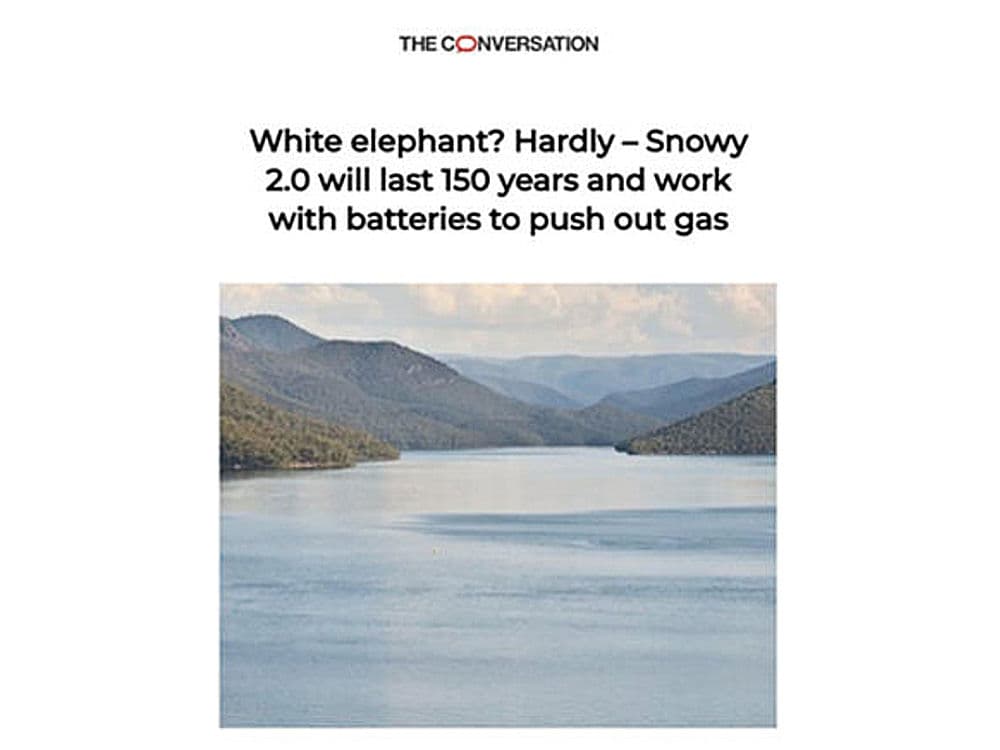
The image below shows one of the lakes which will constitute Snowy 2, the world’s largest pumped hydro storage facility, The facility is to be capable of providing generation at approximately 2 GW capacity for up to approximately 7 days. However, Snowy 2 is currently more than 2 years behind schedule and massively over budget.

Many of the images above, or variants of them, appeared in Facebook multiple times over the first three weeks of November, 2025.
- ORIGINAL CONTENT