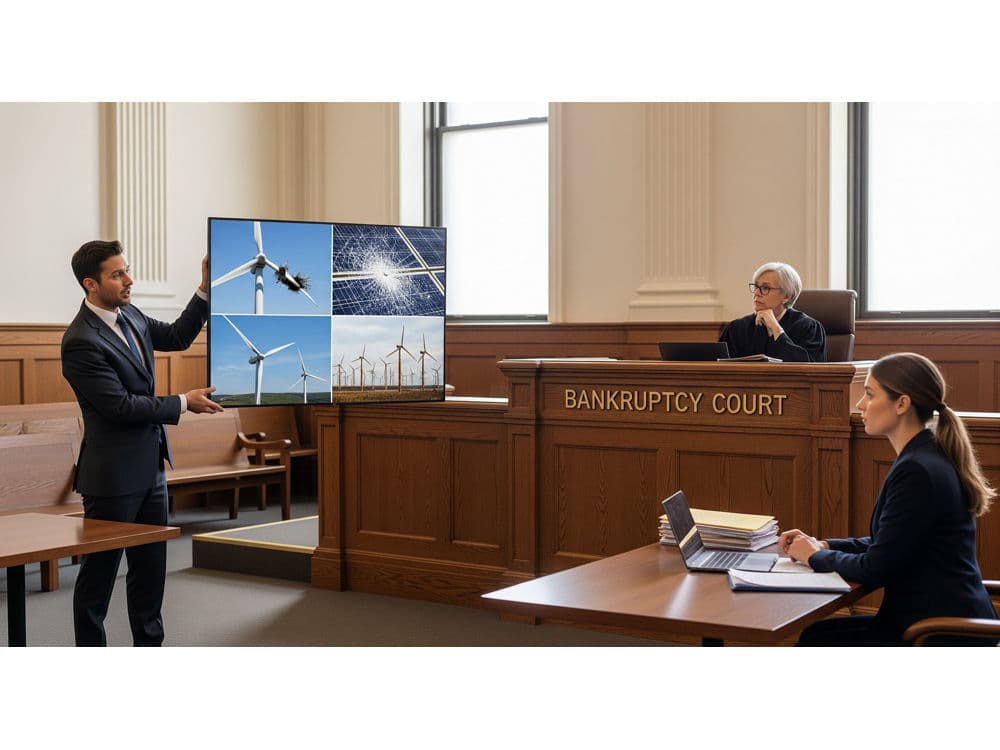
Subsidies encourage market participation and support market growth by reducing the market prices of the subsidized products and actions. However, they do not reduce the societal cost of the products or actions and actually increase societal costs since the subsidies are typically provided from borrowed funds.
Mandates encourage market participation and support market growth through creation of a pseudo-market of some market share by some date certain. Mandates are typically employed in situations in which the desired market penetration is unlikely to be achieved through the application of subsidies of any reasonable magnitude alone.
While subsidies encourage manufacturers and service providers to participate in the subsidized markets, mandates virtually demand participation by rendering a defined portion of the future market inaccessible to non-subsidized and non-mandated products and services. Existing market participants must either offer the subsidized and/or mandated products and services or see their market share reduced by subsidized competitors.
Positioning companies to take advantage of subsidies and mandates requires investment. Manufacturers must develop new products and either retool manufacturing facilities to produce the new products or build new manufacturing facilities for those products. Either action obsoletes all or a portion of existing manufacturing capacity at significant cost. Manufacturers must also retrain existing employees or hire and train new employees to produce the new products.
Service providers must hire and train additional staff and acquire the tools and equipment required to support increased sales, installation and maintenance activities. These investments can be very significant for relatively small service businesses.
Introducing new products into an established market is expensive and not always successful. Sometimes the new product is technically or economically superseded by competing products (Solyndra) or not accepted by the market (Fisker). Failed market entry, particularly by new manufacturers, frequently results in bankruptcy.
Businesses which rely on subsidies or mandates for their existence are at great risk if/when those subsidies and/or mandates are reduced or terminated, as is currently the case for private solar and wind investments, electric vehicle mandates at the federal level and renewable generation mandates at the federal level. The elimination of subsidies and mandates reduces the rates of growth and potential magnitudes of product and service markets which survive without the subsidies and mandates.
Bankruptcies obviously adversely affect the investors in those businesses and their employees. However, they also affect the customers of the products and services of the businesse3s prior to failure. Failed businesses typically are unable to honor warranties provided at the time of sale. They are also frequently unable to provide replacement parts and required service. This has been the case with EV bus manufacturers Proterra and Lion.
Several larger EV manufacturers have avoided bankruptcy, though they have experienced major financial losses. Robert Bryce has estimated that EV manufacturers have experienced losses in excess of $100 billion. Those losses are expected to increase as federal subsidies and mandates are eliminated and state mandates are challenged.. Smaller EV manufacturers, particularly those which manufacture only EVs, are less likely to survive as EV market share declines.
- ORIGINAL CONTENT